Flexible Cord Use Per Osha is Permitted for Continuous Use but Not to Exceed Days
Five Simple Extension Cord Rules to Improve Work Site Safety
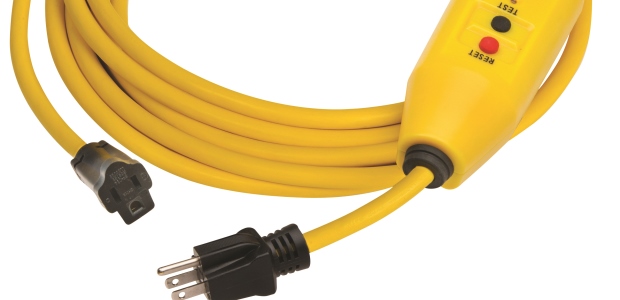
Identifying GFCI use with extension cords is one of the best and easiest steps when inspecting a job site for safety.
Any construction work site is full of potentially dangerous situations. OSHA regulations have been put in place to make construction sites as safe as possible. "Out of 4,251 worker fatalities in private industry in the calendar year 2014, 874 of them, or 20.5%, were in construction—that is, one in five worker deaths last year were in construction."1
Out of a variety of possible injuries, electrical-related injuries have one of the largest associated costs. They are the second-leading reason for death2 after falls. So it is no surprise that electrical safety, specifically electrocution, is a hot topic to any person involved in working at construction sites.
There are many possible reasons for electrocution and although all of the accidents could be prevented, some can be avoided much more easily than others. The topic we want discuss here is best practices for using extension cords to make job sites much safer. Specifically, we want to mention simple rules that can make a difference with very little effort and without requiring any special tools.
Rule 1
There are two ways a construction site can meet OSHA requirements in regard to extension cords. An Assured Equipment Grounding Conductor Program (AEGCP) is one of the ways. This approach requires multi-point cord inspection every work day. It is very time consuming and is often ignored by users. Even if followed, there is no protection if some dangerous situation happens when in use.
This article originally appeared in the July 2016 issue of Occupational Health & Safety.
- OSHA Recordkeeping Guide
In case you missed it, OSHA recently initiated an enforcement program to identify employers who fail to electronically submit Form 300A recordkeeping data to the agency. When it comes to OSHA recordkeeping, there are always questions regarding the requirements and ins and outs. This guide is here to help! We'll explain reporting, recording, and online reporting requirements in detail.
- Incident Investigations Guide
If your organization has experienced an incident resulting in a fatality, injury, illness, environmental exposure, property damage, or even a quality issue, it's important to perform an incident investigation to determine how this happened and learn what you can do to prevent similar incidents from happening in the future. In this guide, we'll walk you through the steps of performing an incident investigation.
- Lone Worker Guide
Lone workers exist in every industry and include individuals such as contractors, self-employed people, and those who work off-site or outside normal hours. These employees are at increased risk for unaddressed workplace accidents or emergencies, inadequate rest and breaks, physical violence, and more. To learn more about lone worker risks and solutions, download this informative guide.
- Job Hazard Analysis Guide
This guide includes details on how to conduct a thorough Job Hazard Analysis, and it's based directly on an OSHA publication for conducting JHAs. Download the guide to learn how to identify potential hazards associated with each task of a job and set controls to mitigate hazard risks.
- The Basics of Incident Investigations Webinar
Without a proper incident investigation, it becomes difficult to take preventative measures and implement corrective actions. Watch this on-demand webinar for a step-by-step process of a basic incident investigation, how to document your incident investigation findings and analyze incident data, and more.
-

OH&S Digital Edition
-

October 2022
Featuring:
- FACILITY SAFETY
Here's Why Constant Bending Can Be Troublesome - INDUSTRIAL HYGIENE
How Artificial Intelligence in Revolutionizing Jobs - PPE: RESPIRATORY PROTECTION
Choosing the Right Respiratory Protection - WINTER HAZARDS
Managing Cold Stress with the Proper PPE
- FACILITY SAFETY
derryberrymestans87.blogspot.com
Source: https://ohsonline.com/Articles/2016/07/01/Five-Simple-Extension-Cord-Rules-to-Improve-Work-Site-Safety.aspx
0 Response to "Flexible Cord Use Per Osha is Permitted for Continuous Use but Not to Exceed Days"
Post a Comment